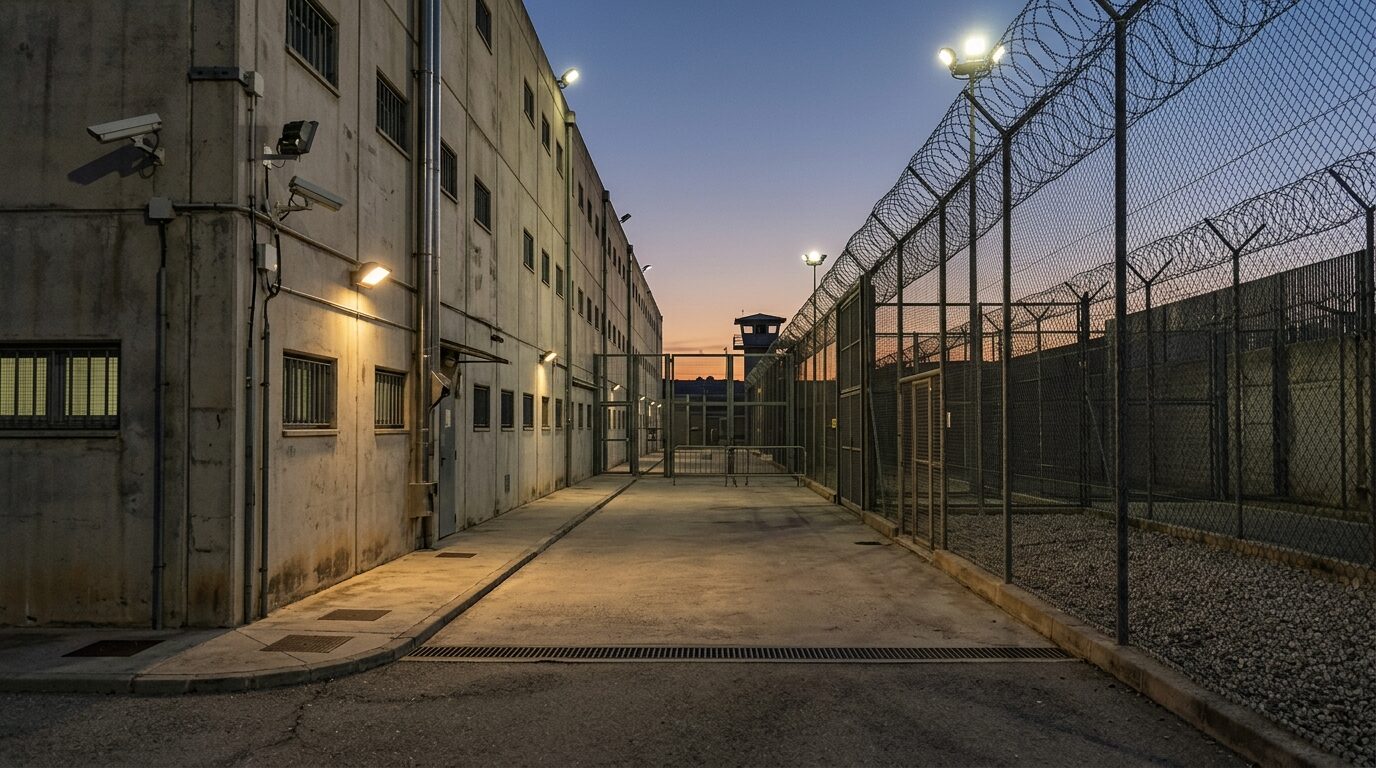
Spain’s prison system is not built around punishment alone. It is designed to move inmates through a regime of classification, treatment and gradual reintegration, with security and rehabilitation working side by side.
That approach matters because it shapes almost everything inside a prison: where a person is held, how much movement they have, whether they can work or study outside, and when they may move closer to release. It also helps explain why Spain’s system is often discussed alongside Spain’s prison population at a ten-year low, since pressure on the system affects daily operations.
At the same time, the model is under strain. Staff shortages, uneven resources and the management of complex inmates continue to test an institution that is meant to be both strict and rehabilitative.
The ‘grado’ system is the key to understanding prison life
The central feature of Spain’s prison regime is the grado system. Inmates are generally classified into first, second or third degree, and that classification determines how restrictive their regime will be.
First degree is the most restrictive and is reserved for the most difficult or dangerous cases. Second degree is the ordinary regime for most prisoners. Third degree is the most open, and it can allow semi-liberty measures such as daytime work or study outside the prison, depending on the person’s situation and legal progress.
This structure is what makes Spain’s prisons different from a simple warehouse model. The aim is to reward progress, manage risk and prepare people for eventual release, rather than keeping everyone under the same level of control until the end of a sentence.
It also connects directly to wider sentencing rules. As explained in our guide to suspended sentences in Spain, alternatives to full custody depend on the offence, the sentence length and the person’s legal profile, which means prison is not always the final stage of the process.
What daily life inside a Spanish prison looks like
Daily life is highly structured. Mornings usually start with wake-up calls and counts, followed by work, education or training for those who are assigned to such activities. The day is broken up by meals, roll calls and controlled periods of recreation.
Routine is not just about discipline. It is also meant to reduce conflict and give inmates a predictable framework for the day, which is important in institutions where tension can rise quickly. For families trying to understand what to expect, our overview of daily life in a Spanish prison gives a more practical picture of visits, routines and contact with the outside world.
Living conditions depend on the prison and on the inmate’s classification. Cells may be shared or individual, and access to exercise, books, workspaces and healthcare varies from one centre to another. Even where the legal framework is protective, the reality can still be limited by overcrowding or staff shortages.
Healthcare is a core right, not a bonus. Medical and psychological care are supposed to be available, alongside legal assistance and channels to maintain family contact through visits, calls and correspondence.
Rehabilitation is the goal, but the system still faces pressure
Spain’s model places a strong emphasis on education, vocational training and treatment programmes. The idea is that custody should reduce reoffending, not only isolate the person from society.
That principle is easy to support in theory, but difficult to apply consistently. Not every prison has the same resources, and not every inmate is in a position to benefit from the programmes offered. The result is a system that can be progressive on paper while still struggling with practical limits.
The challenge becomes sharper for people with mental health problems or substance abuse issues. Prisons are not designed to replace hospitals or long-term social care, yet they are often forced to deal with both. That gap is one reason prison debates in Spain keep returning to staffing and medical coverage, as seen in our report on CSIF and the lack of doctors in Andalusian prisons.
There is also the question of safety inside the institutions. Conflict, assaults and pressure on staff are recurring issues in the prison debate, which is why unions continue to call for more protection and better conditions, as highlighted in coverage of attacks on prison officers in Spain.
Why the Spanish model still stands out
Spain’s penitentiary system is shaped by a constitutional idea: even when a person loses liberty, they do not lose dignity. That is why rights, treatment and family ties are built into the legal framework rather than treated as optional extras.
The model is not unique in Europe, but it does stand out for the weight it gives to reintegration. The best-case path is gradual: start in a restrictive regime, move toward greater responsibility, and leave prison with more support than when the sentence began.
At the same time, public confidence depends on whether prisons can actually deliver that promise. If facilities are overcrowded, under-resourced or unable to manage violence, the gap between law and reality becomes harder to ignore.
What this means for inmates and families
The grado a person is given affects almost everything: how often the family can visit, whether day release is possible and how quickly the road to release opens up. A classification is not fixed. It is reviewed over time, and a well-prepared request from a lawyer can make a real difference.
If someone close to you is in prison in Spain and you are unsure what their classification means or what can be done, contact GC Libertad. We connect you with experienced lawyers and help you with the practical side, in your own language.
In short
- Spain’s prisons are designed around rehabilitation as well as security.
- The grado system decides how open or restrictive an inmate’s regime is.
- Daily life is structured around counts, work, education and controlled recreation.
- Rights to healthcare, legal help and family contact are part of the legal framework.
- The system still faces pressure from overcrowding, staff shortages and complex needs.
Source: Fukuro Legal